Liz Glagowski:
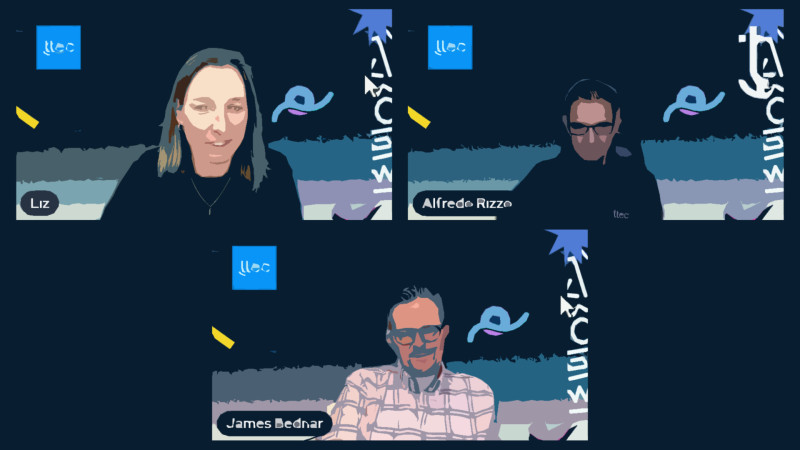
Hey, everyone. Welcome to the CX Pod. I'm your host, Liz Glagowski of the Customer Strategist Journal. Now, we at the Customer Strategist Journal recently released a CX Trends report with TTEC and TTEC Digital that focused on five trends that are really impacting customer experience for 2026.
As part of that, I just hosted a LinkedIn Live with our two experts from TTEC and TTEC Digital, Alfredo Rizzo and JB Bednar, about some of the trends and what they're seeing out of the market. So for this podcast, I wanted to take an excerpt where they focused on a really key part of agentic AI that actually is too new to even appear in the paper that got released back in November.
AI is calling into the contact center and acting on behalf of customers in a lot of different ways that maybe some people aren't prepared for. So we had a great conversation around that topic, and it's excerpted here. Like I mentioned, this is just one excerpt of a larger conversation, so head on over to ttec.com or ttecdigital.com to check out the full LinkedIn Live event, as well as download the CX Trends report. Okay, everyone, happy listening.
Liz Glagowski:
So one final question. I know we've had a great conversation so far, just to wrap it up. we published this paper in November, and things move so quickly that I'm sure the landscape's changed even since then. So can you tell us one thing that has popped up on your radar that's a new hot topic, maybe since we even went live with the report in November? JB, I think you can start with this one.
JB Bednar:
Oh, yeah. There's definitely a couple of hot ones in. Boy, I mean, I don't think the shelf life on any any research is good past a month or two these days. There's an important one, I think, is a trend that we're starting to see that's pretty material. If you Google, you know, AI is calling and tech, you'll see some of the white papers and work we're doing on this now. But it's this idea that you know, customers are using AI as well, right? Google is promoting tools, you know, and customers have access to ChatGPT and Claude and other technologies just the same.
We're starting to see consumers use these AI technologies to engage with brands so that, you know, our contact center associates are engaging with AI agents that represent the consumers. This is a real trend. We are seeing this today.
We've got clients today in the healthcare space where, you know, in B2B scenarios, healthcare payers are using AI agents to, you know, confirm benefits for a patient or to get, you know, a pre-authentic procedure, things like that, where our agents are now being faced with you know, an inbound call, they may be dealing with customers, but now they're also dealing with AI agents.
And I think that's definitely going to be an important one, especially around areas where maybe, maybe you can't control that. I think it's going to be, it's really an area where I think it's going to throw a lot of companies for a loop, because now it means how do we, how do we prepare our agents for working with bots? How do we validate customers? How do we get consent? How do we make our knowledge base material or our transaction, our transactional systems available to external agents?
I mean, that's a that's a complete 360. Nobody saw it coming change for a lot of brands and a lot of contact centers. You know, there's even the fraud potential of that is so high. So You know, we've all thought that, hey, we're gonna replace the contact center agents with AI, and customers are gonna talk to AI, but we're also seeing the opposite, right? We're not talking to customers anymore, we're talking to a customer's AI agent. So, you know, I don't know, Alfredo, do you have, I'm sure you've got a pretty good perspective. You've been working on this one for a long time as well.
Alfredo Rizzo:
We have like a year, I mean, this is such a hot topic, and I'll say that the reaction we get when we start talking about this with CIOs and line of business leaders at our clients, is just like immediate attention and sense of urgency understanding. They say, whoa, this can snowball so quickly. It's just like, their next question to us is, what are you going to do about it for me? Right? Like, How are you going to help me with this? is going to be big. You know, we've seen, you can probably just Google this out there, but there are people talking about the next version of the internet.
It's not going to be built for humans. It's going to be built for machines, meaning AI assistants. So if you're a brand that wants to be found, it's not going to be a human finding you. It's going to be an AI assistant working on behalf of a human consumer. to do something.
People are not going to be necessarily looking at your website and downloading your app. They are going to be going to ChatGPT and Gemini and Claude and Grok and saying, you do it for me. You book my travel. You go on this travel site where I have an account, pick one, and I need to go to these places with these people and have these experiences, and I want to fly this way and do this, and I need cars, whatever, and just do it all for me. I've got your credentials with this travel site, so it's all in your shopping cart. Please review and tell me if you like. Oh, I like it. Okay, if you want to give me your credit card, I'll buy it for you. Or else you can log into the site and do it yourself. So that is happening right now. And the Center for Human Consumers to Action is going to shift. right, into these AI assistants.
And so it's not going to stop with the example I just gave. It's going to continue very much into, well, there is no digital way to do this, call them. Call the brand and do it. So we are seeing clients reach out to us. In the summer, we had a major financial services client that reached out to us and said, hey, have you been seeing this? And we're like, yep, we've been seeing it.
We just had an AI assistant call us to negotiate that settlement on behalf of a customer. And at first we thought it might be fraud, but nope, every authentication question we asked for, you know, 2 minutes, the AI is infinitely patient and answered them all. It had all the goods. Maybe there was a human behind it because we even asked it out of wallet questions and it had the authentication. So then we were like, the human agent was confused.
Should I service this or not? OK, we decided to go ahead and service it. So we actually worked with the AI assistant for 20 minutes to negotiate a payment plan on this loan. And this was an expert negotiator. They were able to lower the settlement amount from what was owed, keep the company from referring the customer to credit bureaus, and so on and so forth. This had been expertly trained to do that negotiation task on behalf of human consumers by calling into companies, building a strategy for who we're going to call first, how much disposable income you have, and so on and so forth.
And that was certainly an eye-opener because it's no longer just Google calling for dinner table reservations. It's now moving up the value chain of use cases, right? Think about an expert negotiator working on your behalf. So this is real. This is going to come fast. And we need to have a strategy for do we even service it? How do we determine good and bad AI that's calling us? What do we do about it? Are these decisions that we have with AI on behalf of human customers legally binding? And do they hold water long-term? What is our position? So we need to start thinking about this. So yeah.
JB Bednar:
I've got one more to share on that point because you shared that example and I would not have believed it if I did not listen to this actual call myself. but was listening to one of these AI calls and the agent didn't break character.
At about the midpoint of the call, the agent started to get a bit cautious, right? Because it was clearly not quite a person. Maybe it was the first time one of these agents had taken one of these calls and they started to push back on some of the AI questions.
And the AI asked to speak to a supervisor. I'm not kidding you.
Now, look, somebody programmed this thing to do it. Literally, the AI saying, OK, I'm not achieving the goal that I was developed to achieve. This agent is putting up a roadblock. I'm going to ask for a supervisor. It's crazy. But imagine how agent training has to change now.
There was a question in here around fraud from Catherine. You know, now we're expecting a lot of agents to be able to identify a deep fake or a fake voice or to suss out an interaction that might not quite seem perfect and then do that. That's challenging to do at scale. It's not easy to identify these voices if you don't listen to them all day long as being AI generated.
Alfredo Rizzo:
Yeah, I think we're going to have to shift, JB, from not just thinking about customer experience. I'm going to coin a term here. We're going to have to think about machine experience. What machine experience are we building for the AI agents that are going to act on behalf of our customers? How are we going to say they can do everything that a customer is authorized to do with their bank account, for example, or insurance policy? right? Or healthcare appointments and records and so on. Or maybe not.
Maybe the human customer has to delegate permissions to the AI agent. There has to be a framework to tell the company, the service provider, the brand, you know, this permission has been delegated. You can deal with my AI agent for this, but not everything that I can do as a human, right? So This is going to be rapidly evolving. I think this is gonna be something we're gonna be focusing on quite a bit this year.
There was another great example I had with one of our clients where they were struggling because customers were calling and saying, ChatGPT gave me this instruction. of how to fix my problem, which was wrong. And it turns out that ChatGPT had, you know, crawled the database, the knowledge base of this client a year ago. And its knowledge, its corpus of information was a year old knowledge base data. But customers expected that if I'm going to ask how to fix this product problem, I'm going to get the perfect answer from ChatGPT, not a year old answer.
This is not a problem any of us have ever had to deal with historically, right? We would expect, well, a customer's going to come to the knowledge base. It's going to be up to date. Now we're seeing people use, you know, Google, AI search, Claude, ChatGPT in lieu of, or as the first line for customer experience. How do we make sure that AI agents that we don't even control are giving our customers the right information? That's a different paradigm entirely.