The student loan landscape is a perfect storm of unprecedented policy volatility, information overload, and the intricate complexity of individual borrower situations.
This moment in time is uniquely challenging because millions of borrowers are grappling with the end of pandemic-era forbearance, the introduction of new repayment programs like SAVE, and constant shifts in federal guidelines. This creates angst for borrowers and lenders alike, leaving many in limbo, unsure where to turn for accurate answers about their options and obligations.
This ambiguity, coupled with a rising volume of incoming calls, has everyone on edge. It’s a critical moment for lenders because these young borrowers represent a lifetime of potential loyalty. How we support them now, through this period of intense uncertainty, will define our future relationship.
Why traditional service models fall short
In such a dynamic and high-stakes environment, traditional service and training models simply fall short.
- Policy volatility: The rapid and frequent changes in federal student loan policies, including the introduction, modification, or even elimination of repayment plans, make it nearly impossible for human customer care associates to stay consistently up-to-date. Static knowledgebases become outdated almost as soon as they’re published.
- Information overload: Borrowers face a dizzying array of payment options — Standard, Extended, Graduated, Income-Based Repayment (IBR), Pay As You Earn (PAYE), Income-Contingent Repayment (ICR), and the Saving on a Valuable Education (SAVE) plan — each with specific eligibility criteria, terms, and implications for forgiveness. Expecting associates to master every nuance for every unique borrower situation without advanced tools is unrealistic.
- Complexity of individual situations: Each borrower’s financial circumstances, loan types, and repayment history are unique. A one-size-fits-all approach fails to address these complexities, leading to frustration and missteps.
- Training lag: Traditional training methods cannot keep pace with the speed of policy changes. Associates often feel unprepared, leading to lower confidence, inconsistent advice, and longer call handling times. This directly impacts the customer experience, leading to friction, frustration, and attrition.
The necessity of AI: Solving the problem at scale
This is precisely where AI becomes indispensable to solve the problem at scale. When traditional models buckle under the weight of complexity and change, AI offers the agility, accuracy, and personalization needed to deliver exceptional customer experiences. It’s more than chasing efficiency. It’s about ensuring fairness, clarity, and support for millions of borrowers while safeguarding the lender’s long-term relationship.
An AI-enhanced customer experience can directly improve outcomes for borrowers. Personalized interactions bring clarity to options that help borrowers stay on track with repayment, avoid missteps, fees, delinquency, and the dreaded “repayment cliffs” — sudden, unaffordable increases in monthly payments that can push borrowers into financial distress. By proactively identifying and guiding borrowers away from these cliffs, AI helps prevent financial stress and fosters trust.
Lenders, in turn, operate more efficiently and responsibly with the help of AI, ensuring a quality customer experience across the entire student loan lifecycle.
Consider the sheer volume of information and the nuances of each borrower’s situation to see how vital a role AI can play. Our associates need to be equipped with real-time, accurate data and personalized guidance. AI can play a transformative role here via:
- Dynamic knowledgebases: AI-enhanced systems can instantly pull up the latest federal guidelines, program details, and FAQs, ensuring associates have the most current information at their fingertips, even as policies evolve. This directly combats information overload and policy volatility.
- Intelligent assistant tools: Imagine an AI assistant that listens to the customer’s query, analyzes their profile, and suggests relevant repayment options or talking points to the associate in real-time. This reduces research time, boosts associate confidence, and helps navigate the complexity of individual borrower situations.
- Sentiment analysis and prioritization: AI can help identify distressed callers or complex issues, allowing for more empathetic and efficient routing or escalation. For more insights on how empathy needs to be tailored to specific needs, check out our “Is empathy overrated?” trends report.
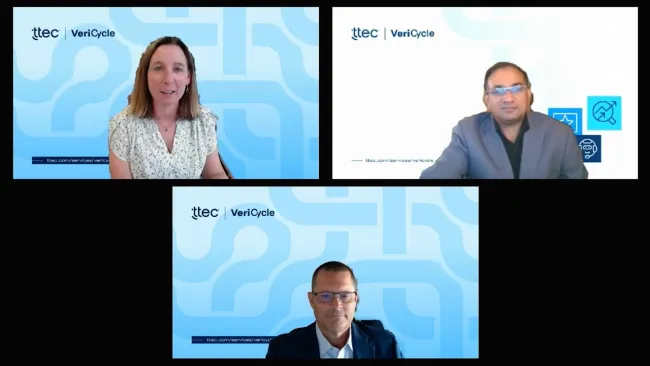
- Training and Simulation: AI can create realistic call simulations, through RealSkill, for example, allowing associates to practice handling difficult conversations and complex scenarios before they face them live. This addresses the shortcomings of traditional training by providing adaptive, real-time learning. Here’s a quick demo showing how the RealSkill bot role-plays with associates and supercharges learning.
It’s a sobering time for student loan borrowers. They’re eager to jumpstart their careers and don’t want to be saddled by obligations they don’t understand. With the future of these plans in flux, lenders and service providers need to get their support centers up to speed. And fast.
At TTEC, we see customer experience as a critical support layer across the entire student loan lifecycle, connecting students, servicers, and regulators with clearer communication, faster resolution, and more human, empathetic service at scale.