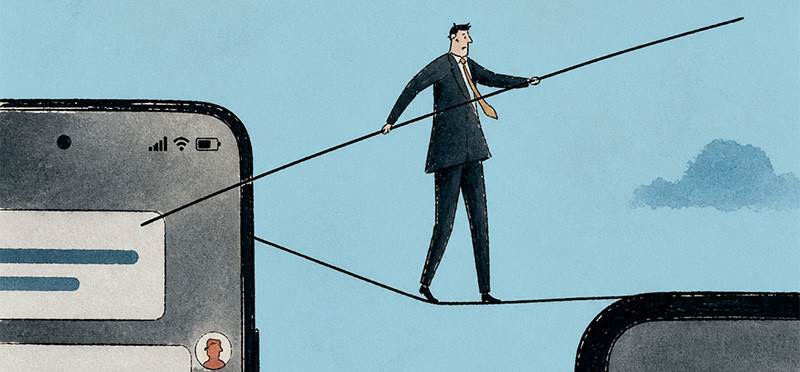
Face it. It doesn’t take much to tarnish a brand reputation and recovery isn’t easy. Alienate customers with an experience that pales in comparison to the stellar interaction they had elsewhere and … poof. They’re gone.
CX innovators have changed the game. By investing in technology, partnering with experts, and experimenting with new ways to elevate the experience, they’ve trained consumers to expect more and more. In this game of What Have You Done for Me Lately, new best practices have emerged and they are not aspirational. They are not trends to watch from the sidelines. They are deployed and delivering results.
This moving of the goalposts has given rise to seven strategies of a new CX playbook. Research findings validate these measures are working and practitioners across all verticals are showing how it’s done in the real world from banking, retail, and travel to healthcare, transportation, and more.
Elegant handoff — when I say so
Consumers love self-service, bots, and automation that expediates tasks — until they don’t. That’s when they want to connect with a human, now. Not a callback. Not a fill-out-this-form-please. A seamless handoff to a knowledgeable person, when the customer decides it’s needed, is one of the key best practices of excellent CX.
Look no further than Klarna, a Swedish fintech, for an example of how to master the handoff. The global payments network leverages ChatGPT in its AI shopping assistant. “We push everyone to test, test, test, and explore,” Klarna CEO and co-founder Sebastian Siemiatkowski said following the launch.
Klarna’s AI bot handled more than 2 million conversations — two-thirds of total volume — in the first month of deployment. While these interactions mostly involved routine refunds and payments, the bot escalated complex financial disputes to human associates.
Because the handoff from bots to humans included a full chat history, customers did not need to regurgitate details they already relayed to the bot. Most customers (81%) want associates to continue a conversation that originated in chat without need to backtrack; 74% get frustrated when forced to repeat themselves.
Klarna reported its AI assistant performed the work volume of 700 live associates, slashed resolution times from 11 minutes to 2 minutes, and increased profits an estimated $40 million in its first year
Bots’ ability to resolve customer inquiries without human intervention varies widely across industries, from a high of nearly 98% in the nonprofit sector to a low of 38% in gaming. Chat’s ability to fully resolve issues fared well in regulated industries like banking/finserv (75%) and telecommunications (64%); while healthcare came in lower (46%), according to the Comm100 AI Live Chat Benchmark 2026 report.
The trust and safety imperative
Consumers expect the platforms they interact with to provide safe experiences. This is particularly important in the gaming, entertainment, e-commerce, and social media sectors.
One standout that’s made transparency and content curation a priority is Pinterest, the visual discovery platform that hosts digital bulletin boards where users “pin” their style ideas. The company uses advanced machine learning, computer vision, and natural language processing to detect policy violations and remove content that depicts self-harm, hate speech, and graphic violence.
With the help of automation and advanced technologies, Pinterest reports that most offending content is removed proactively, before it’s even viewed by users. For example, 98% of pins deactivated due to violence or threats during Q1 2025 were never seen by viewers, according to the Pinterest Transparency Report.
Route machine customers to the right queue
Major telecommunications companies such as Vodafone have led the way in addressing the rise in customers using their own AI assistants to interact with businesses on their behalf.
Coined by a Gartner analyst, “machine customers” (or “custobots”) create new challenges in the contact center. AI-initiated calls can get routed to highly paid, human associates who are unaware they are interacting with a synthetic voice. Associates trying to be empathetic and deliver good CX can find themselves spending a lot of time debating AI over a modest $10 late fee — not the best way to use “human in the loop” resources.
By upgrading interactive voice response (IVR) systems with acoustic analysis and natural language understanding (NLU), organizations can detect synthetic voices and AI scripts and route such calls to a dedicated machine queue instead of transferring to a human.
The Pairpoint platform, a joint venture of Vodafone and Sumitomo, is designed to allow verified connected devices, vehicles, furniture, and machines to transact securely without human intervention. For example, an electric vehicle equipped with Pairpoint can autonomously communicate with a compatible charging station to negotiate the best price, authorize payment, and update the billing account in real-time — bypassing the contact center altogether.
From one-time purchase to full journey
Consumers, particularly Gen Z, look beyond a purchase as a singular transaction and instead expect a promise of continuous value. That means ongoing connection and support with a brand post purchase.
For a vivid example of what not to do, consider an early-pandemic Wall Street darling whose fall from grace provides more compelling evidence, insights, and lessons than a success story. A rough patch for fitness company Peloton offers a cautionary tale about chasing growth over nurturing and sustaining a quality customer experience.
During the pandemic boom, Peloton aggressively prioritized customer acquisition and sales while neglecting its post-sale customer experience and support infrastructure. This failure to support new users — plus supply chain issues beyond anyone’s control — resulted in delivery delays, collapsed customer service, and a staggering $2.8 billion net loss in 2022 as brand trust evaporated. To survive the crisis, new leadership pivoted the company's strategy toward subscription retention by outsourcing customer support to specialized third-party experts to fix the broken post-sale journey.
The company’s path to recovery offers a clear blueprint: Brands cannot scale operations on fixed, in-house infrastructure alone. By outsourcing manufacturing, logistics, and customer support to specialized third parties, companies can navigate this complicated terrain.