How to overcome legacy tech debt and AI integration traps
When it comes to AI adoption in CX, the tech traps are everywhere. You could:
- Wait and see until the AI market matures and never catch up.
- Bolt on point AI solutions as your tech stack sprawls and becomes unmanageable.
- Commit to a multi-year platform migration that leaves you behind competitors innovating now.
And while you’re trying to make a decision, AI capabilities keep accelerating, and the gap between customer expectations and what legacy contact center stacks can support keeps widening.
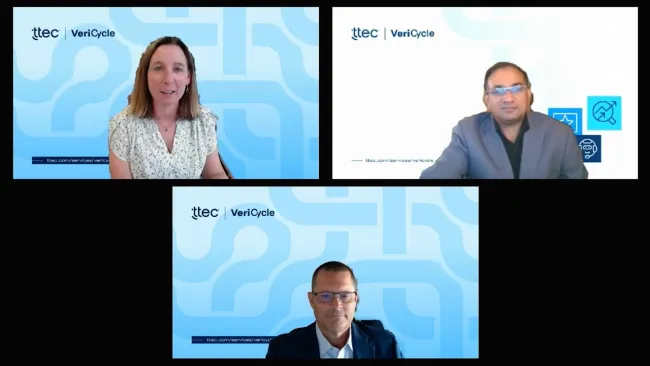
That tension drove the recent webinar, "AI Adoption: The Tech Traps Nobody is Talking About," featuring Alfredo Rizzo, Chief Technology Officer at TTEC Digital, and Larry Mead, Global Lead of Experience Transformation at TTEC Digital.
Critical AI adoption traps for CX leaders to avoid
Throughout the webinar, Rizzo and Mead returned to three common paths CX teams take when trying to move forward with AI, and why each one tends to disappoint.
Trap 1: The risk of “wait and see” in AI adoption
For many leaders, delaying AI adoption feels like a safe option. The thinking is simple. Let the market mature, avoid early risk, and adopt later when solutions are clearer. In practice, that approach carries its own risk.
“If you sit back and wait,” Mead warned, “there’s just so much learning that happens through individuals, use cases, and feedback that you miss out on.”
Trap 2: The hidden costs of custom, point-to-point AI integrations
Another common response is to build custom integrations between contact center platforms and AI tools. This can feel fast at first, especially with modern development techniques.
But as Rizzo explained, every AI use case introduces another integration to maintain. Virtual agents, agent assist, summarization, analytics, and quality management often require separate connections, even when they touch the same platforms.
Over time, that maintenance burden slows innovation and locks teams into aging AI capabilities.
Trap 3: Delaying AI adoption for a full migration
At the other extreme, some organizations decide to modernize everything before pursuing AI. While modernization is often necessary, tying AI progress to a multi year transformation can delay value at the exact moment when speed matters most.
“If you wait until everything is migrated,” Rizzo noted, “you may be sitting on the sidelines while competitors are already learning how to use AI effectively.”
For more, check out the webinar “AI adoption roadmap: Navigating the tech traps nobody is talking about.”
A version of this article first appeared on ttecdigital.com.