For decades, customer experience (CX) has been measured in seats, headcount and handle time – but that model is breaking down. Today's brands aren't buying capacity; they’re buying results.
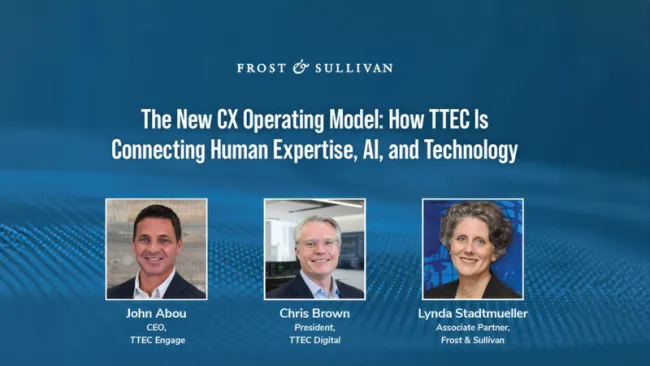
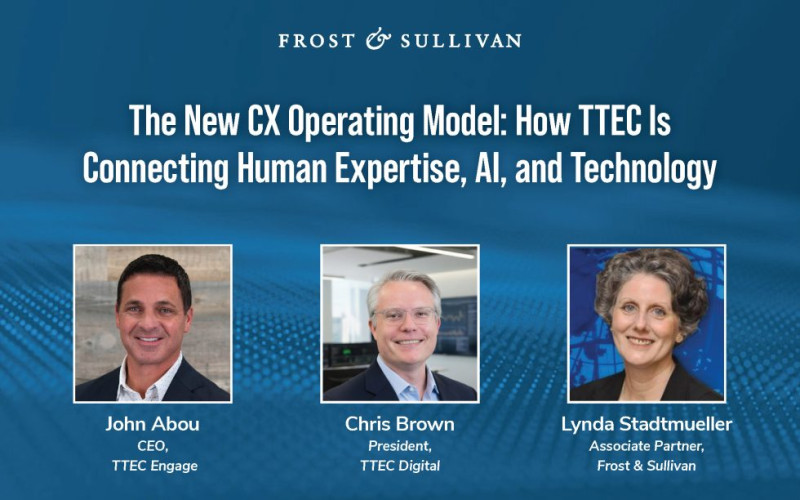
In a recent Frost & Sullivan Transformational Growth Leadership conversation, John Abou, CEO of TTEC Engage, and Chris Brown, President of TTEC Digital, explained what that shift means for CX leaders. AI is changing what's possible, but the operating model around it still decides the outcome.
Break down the silos to deliver outcomes
Abou put it plainly: "Clients are no longer buying just people or seats. They are buying outcomes."
They want lower customer effort, better resolution, stronger retention, more revenue, and a more resilient operation. The basics haven't gone away; service excellence and reliable delivery still matter. But the value "has moved from a labor-only or capacity-based model toward intelligent orchestration," Abou said.
When operations and technology sit in separate silos, nobody owns the full result. Delivering on outcomes means bringing operational expertise, frontline talent, data, AI, and technology together around a shared goal, with one team accountable for the result.
Abou described this as being "jointly accountable for the outcome rather than operating as two separate organizations."
AI needs operating discipline to deliver
AI has become an executive-level priority, but organizations need to be strategic about where and when they use it.
"AI can eliminate friction and augment people, but it is not a substitute for leadership or operating discipline," Abou said. Companies need strong processes, accountable owners, and a clear experience strategy to decide where AI will make the biggest difference.
A common mistake is starting with the technology instead of the business problem. Pair AI with human judgment, tie it to a clear business outcome, redesign the workflow, plan for adoption, and then choose the right technology. The technology should come last, not first.
The workflow, not the tool, makes AI work
"At the end of the day, it is about the workflow," Brown said. Success depends on connecting three things: the legacy technology already in place, the new AI being introduced, and the people who make the end-to-end experience work.
AI brings real capabilities, such as call summarization, automated quality assurance, and proactive knowledge management – but Brown was candid about its limits. AI doesn't solve change management, for instance. These tools change what it means to be a customer service associate, including how people are trained and supported.
The future isn't humans versus AI
Looking three to five years ahead, both leaders expect big changes. Brown predicted continued consolidation, a growing battle for AI talent and more outcome-based solutions.
Abou predicted that as AI takes on more routine tasks, the remaining human interactions will continue to grow more complex and more valuable. The companies that lead the way will connect those interactions to product, revenue, and loyalty decisions in real time.
Winning the next era of CX
The next era of CX won't be led by the organizations with the most AI. It will be won by the ones that turn new capabilities into real customer and business value. For more of the conversation, read the full Frost & Sullivan conversation, "The New CX Operating Model: How TTEC Is Connecting Human Expertise, AI, and Technology."