Retailers have spent years removing friction from the customer journey. Fewer clicks, faster checkout, smarter search, more relevant recommendations, easier service – those have been the goals.
For more than two decades, the e-commerce landscape has been defined by the familiar search bar, a digital gateway where consumers use keywords to manually sift through endless product options.
But the paradigm is changing rapidly and in 2027 some of the customers navigating retail experiences may not be customers at all.
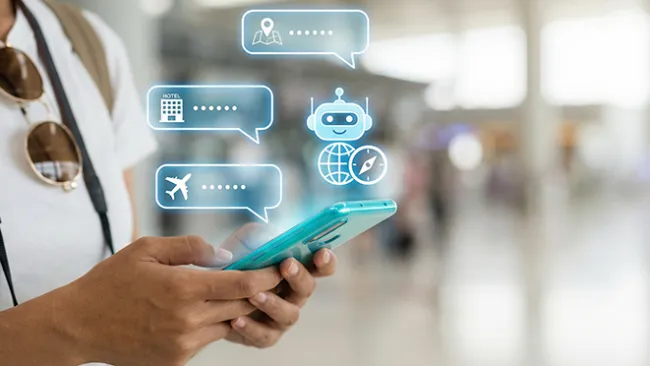
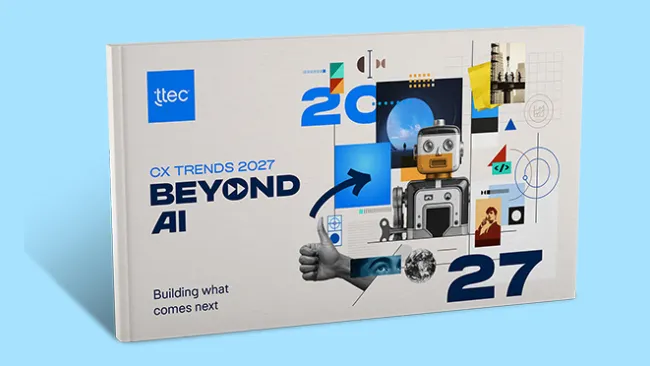
Personal AI agents are emerging as a new participant in the customer journey, researching options and taking actions on consumers’ behalf. It’s a major shift and of the trends identified in TTEC’s CX Trends 2027 report, “Beyond AI: Building what’s next.”
In the coming year, the customer will become agentic. And for retailers, the implications extend well beyond adding another AI tool.
When AI starts shopping for the shopper
Consumers are becoming increasingly comfortable collaborating with AI. Recent research shows most customers are open to collaborating with AI for activities such as researching options, would let AI complete certain tasks on their behalf, and expect generative AI to influence their purchase decisions.
That changes the dynamics of retail CX. A shopper doesn’t necessarily need to spend an evening jumping among websites, reading product descriptions, comparing options, checking policies, or searching for the best offer. Increasingly, an AI agent can take on parts of that work.
The transition won’t happen all at once. Consumers may initially be comfortable delegating research or clearly defined tasks while remaining reluctant to hand over autonomous decisions or purchases.
But even partial delegation matters.
For retailers, product discovery may increasingly happen through an intermediary. The question shifts from, “Can customers easily find and buy from us?” to also include, “Can the AI agents acting for those customers do it?”
That makes accessibility to personal agents a new competitive consideration, and retailers that block AI agents could remove their brand from the customer’s consideration.
Retail CX must work for two audiences
Most retail experiences were designed around a simple assumption: there is a human at the other end. Websites, apps, IVRs, chat flows, authentication processes, and service policies reflect that assumption. Personal agents challenge it.
Today, retailers are serving two audiences: the customer (emotional and trend-led) and the agent (literal, systematic, and data-led). So, brands now have to get the right product in front of both shoppers.
If an AI agent contacts a retailer about an order or attempts to take an action for a shopper, new questions emerge: Is this a person or an AI agent? Which customer does it represent? What did that customer authorize it to do? Is the requested action allowed under the retailer’s policies? When should the agent be asked to hand control back to the customer?
For retailers, it means they must identify the agent, authorize its authority, and determine the appropriate action, whether that means resolving the request, escalating it for additional customer verification, or declining it.
But this is a new frontier, and the underlying protocols are still immature and changing quickly, so flexibility may be just as important as readiness.
Don’t wait for personal agents to become mainstream
This is where retailers should resist the temptation to view personal agents purely as a technology project. The first decision shouldn’t be which tool to buy, but what experience the business intends to provide.
Brands need to make deliberate decisions about whether to block, selectively allow, or embrace personal agents and establish appropriate safeguards and accountability around that choice.
Start by asking:
- Where are we most exposed? Identify journeys customers may be especially motivated to delegate because they involve significant effort, friction, or potential value.
- Where will we draw the boundaries? Decide what an AI agent may do, what requires additional customer verification or human involvement, and what actions the business won’t permit.
- How will human and agentic journeys connect? Authentication, escalation, resolution, monitoring, and measurement all need to work across the two experiences. And some more-complex interactions (refunds or quality issues, for instance) will always need human support.
- Can our CX stack support the strategy? Evaluate where the current environment may need stronger detection, permissions, or observability capabilities.
- Who owns this? Establish accountability for aligning experience, policy, risk, and technology decisions rather than allowing personal-agent strategy to become another siloed AI initiative.
The consideration set is changing
For years, retail brands have fought to be where their customers are: stores, search engines, social platforms, marketplaces, apps, and messaging channels.
Personal agents are poised to become another gateway. The difference is that this gateway can do more than display an ad or send a shopper to a product page; it can work toward an objective on the customer’s behalf.
That creates risk, but also opportunity.
The retailers that begin preparing now can be strategic about how they want AI agents to interact with their brands, rather than scrambling to respond after those agents are already knocking at the digital door.
In 2027, designing great retail CX will mean thinking beyond the individual shopper. The personal-agent experience is becoming part of the customer experience itself.
To read more and see the other trends we’re forecasting, download our CX Trends 2027 report, “Beyond AI: Building what comes next.”